Electroretinogram Market Striking Opportunities, And Forecasts To 2030
Electroretinogram Industry Overview
The global electroretinogram market size was valued at USD 551.04 million in 2021 and is projected to expand at a compound annual growth rate (CAGR) of 8.68% from 2022 to 2030.
Constant innovation and growth in the number of ophthalmology clinics and research centers lead to the rising demand for electroretinograms in the market. Moreover, the rising prevalence of eye disorders, such as diabetic retinopathy, glaucoma, retinitis pigmentosa, macular degeneration, cone-rod dystrophy, and other related retinal disorders, are expected to fuel the market growth in the forecast period. In addition, increasing preference for early disease diagnosis, increased screen time due to the pandemic, and the rapidly rising geriatric population are the factors expected to foster the market growth.
Gather more insights about the market drivers, restrains and growth of the Global Electroretinogram Market
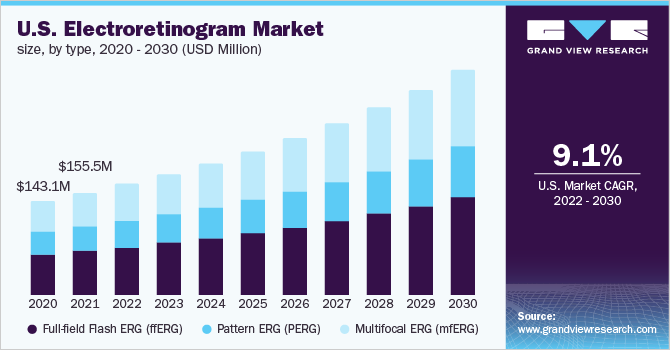
However, higher costs of electroretinography procedures and risks associated with the electroretinogram may hamper the market growth globally. The Electroretinogram (ERG) is a clinical ophthalmic diagnostic test that measures the electrical activity of the retina in response to a light stimulus. The electroretinogram ascends from currents generated directly by retinal neurons in combination with contributions from retinal glia. Ophthalmologists use these electroretinograms to determine the need for retinal surgery or other eye surgeries, such as cataract surgery. It is used to diagnose patients with several symptoms, such as photophobia, nyctalopia, reduced visual acuity, and field defects. The market witnessed a slightly positive impact during and post-COVID-19 pandemic.
According to the study published on PubMed Central by NCBI, the COVID-19 pandemic can affect the retinal function. The diameter of retinal veins is directly proportional to the severity of COVID-19 disease infection. COVID-19 diseases can bring noteworthy changes at the retinal level, such as affecting retinal vasculature. Moreover, few cases related to retinal side effects were reported after the COVID-19 vaccination. Hence, to diagnose and monitor the health of the retina and other related eye disorders, electroretinograms were in use. Furthermore, as a result of lockdowns and the risk of infection during the pandemic, the negative impact on follow-up and treatment of chronic eye disorders, such as diabetic retinopathy and macular degeneration, has been seen.
The increasing prevalence of diabetic retinopathy is expected to boost the market in the forecast period. According to a recent study published by the CDC, diabetes is among the leading causes of new cases of blindness in adults and the prevalence of diabetic retinopathy is high, which affects around one-third of adults with diabetes aged 40 years. In 2018, around 4.2 million adults had diabetic retinopathy and 655,000 had vision-threatening diabetic retinopathy. Electroretinogram is useful to determine the inherited or acquired retinal disorders, such as retinitis pigmentosa (genetic disease causing loss of peripheral and night vision), retinoblastoma (retinal cancer), macular degeneration (loss of vision due to macular cells deterioration), retinal separation (detachment of the retina from the back of the eyeball), and cone rode dystrophy (vision loss due to weakened cone and rod cells), to name a few.
Browse through Grand View Research's Medical Devices Industry Research Reports.
- Ophthalmic Handheld Surgical Instruments Market - The global ophthalmic handheld surgical instruments market size was valued at USD 2.0 billion in 2021 and is expected to expand at a compound annual growth rate (CAGR) of 3.8% from 2022 to 2030.
- Dry Eye Treatment Devices Market - The global dry eye treatment devices market size was valued at USD 223.0 million in 2021 and is expected to expand at a compound annual growth rate (CAGR) of 7.6% from 2022 to 2030.
Market Share Insights
- April 2021: LKC Technologies announced that the National Health Surveillance Agency (Anvisa) has approved the UTAS device, making it a significant advancement in preserving and improving patients’ vision in Brazil.
Key Companies profiled:
Some prominent players in the global electroretinogram market include
- LKC Technologies, Inc.
- Diagnosys LLC
- Electro-Diagnostic Imaging, Inc.
- Diopsys, Inc.
- Metrovision
- Roland-consul
- CSO Italia
Order a free sample PDF of the Electroretinogram Market Intelligence Study, published by Grand View Research.


Comments
Post a Comment